Valencia · History · Sacred Art
Museum of the Basilica of Our Lady of the Forsaken: History, Art and Devotion
Explore the religious heritage, artistic traditions and popular devotion that make the Basilica of Our Lady of the Forsaken one of Valencia’s most emblematic landmarks.
In the heart of Valencia’s historic centre, beside Plaza de la Virgen, stands the Basilica of Our Lady of the Forsaken, one of the city’s most cherished religious landmarks. Its history is closely connected to Valencia’s spiritual, cultural and social identity.
Exploring its heritage means discovering centuries of tradition, sacred art and expressions of faith that continue to play a role in Valencian life. Its importance extends beyond religion: it also offers insight into the city’s historical development and the enduring significance of the Virgin in local culture.
The heritage associated with the basilica provides an opportunity to understand how architecture, painting, sculpture and popular celebrations contribute to preserving a community’s collective memory.
The History of Our Lady of the Forsaken
Devotion to Our Lady of the Forsaken has its roots in Valencia’s history of charitable care. During the fifteenth century, the city developed initiatives to assist sick people, those in need and individuals without resources, at a time when religious charity and social welfare were closely connected.
Tradition links this devotion to the work of a confraternity dedicated to the innocent, the forsaken and other vulnerable groups. Over time, the Virgin became increasingly important to the people of Valencia, eventually emerging as one of the city’s principal spiritual figures.
The history of this devotion also reflects a deeply human concern: the need to protect, care for and accompany people facing hardship. This meaning has helped sustain its relevance across generations.
The Basilica of Our Lady of the Forsaken
The basilica occupies a prominent position in Valencia’s historic landscape. Its location beside Plaza de la Virgen and close to Valencia Cathedral places it within one of the city’s most significant areas for historical and religious heritage.
The temple was built during the seventeenth century and is an important example of religious architecture from that period. Its history is closely associated with Marian devotion and the celebrations held in Valencia throughout the year.
The building is more than a place of worship. It represents a meeting point for generations of Valencians and a space where religious traditions remain connected to local history and customs.
During a visit, take time to appreciate both the architectural design and the artistic and devotional elements found inside. These details help explain the spiritual and cultural role the basilica has played over the centuries.
Sacred Art and Artistic Heritage
Religious art has played a fundamental role in communicating beliefs, stories and cultural values. In places such as the Basilica of Our Lady of the Forsaken, images, paintings and decorative elements belong to an artistic tradition that has developed over time.
Sacred art is best understood within its historical context. Religious works were not created solely for aesthetic purposes. They also supported prayer, communicated biblical narratives and expressed the relationship between a community and its beliefs.
The Image of the Virgin
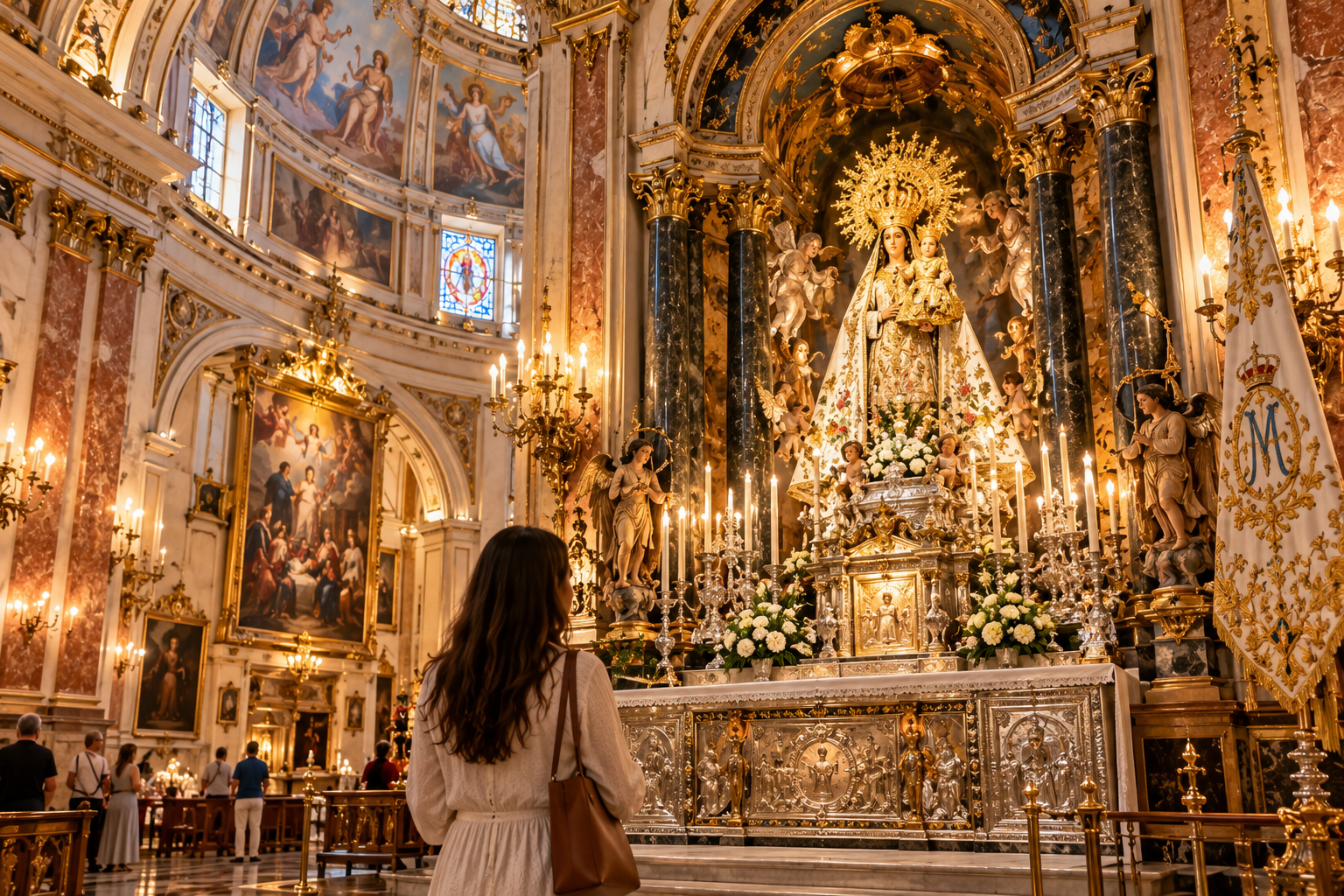
The image of Our Lady of the Forsaken occupies a central place in Valencian devotion. Its meaning is associated with protection, compassion and care for people in vulnerable circumstances.
Its presence extends beyond strictly religious settings and forms part of many cultural expressions in Valencia. The image is associated with celebrations, family traditions and public demonstrations of devotion that have been passed down through generations.
Painting, Sculpture and Decoration
Sacred painting and sculpture are two of the principal forms of religious artistic expression. They portray holy figures, historical episodes and symbols that help visitors interpret Christian traditions.
The decoration of religious buildings also offers clues about the artistic tastes of different periods, the techniques used by craftsmen and the importance communities attached to their places of worship.
Visitors interested in the relationship between artistic creation, heritage and culture can broaden their exploration by discovering art galleries and their diverse collections, where art is presented through different perspectives and visual languages.
The Cultural Significance of the Virgin in Valencia
Our Lady of the Forsaken is popularly known in Valencian as La Geperudeta, a traditional affectionate name associated with the posture of the statue. The name reflects the close relationship many Valencians feel with their patron saint.
Her importance is especially visible during celebrations dedicated to the Virgin, when the city hosts religious ceremonies, public gatherings and expressions of collective identity.
One of the most significant occasions is the feast of Our Lady of the Forsaken, celebrated in May. Events associated with the feast bring together people of different generations and preserve a tradition that combines spirituality, family memories and local culture.
This continuity demonstrates that heritage consists of more than buildings and objects. It also includes practices, stories, ceremonies and shared knowledge that help define a community’s identity.
The Historic Surroundings: Plaza de la Virgen
A visit to the basilica can be combined with a walk through Plaza de la Virgen, one of the most recognisable public spaces in Valencia’s historic centre. The surrounding area brings together buildings and monuments closely connected to the city’s development.
The nearby Valencia Cathedral and other historic landmarks demonstrate the importance this part of the city has held for centuries as a religious, institutional and social centre.
Exploring the streets on foot helps visitors understand how the old town has evolved and how different historical periods coexist within the same urban landscape.
To make the most of the experience, take time to examine architectural details, admire the façades and learn about the history of the buildings surrounding the square. The area is particularly rewarding for anyone wishing to discover Valencia beyond its main shopping streets.
How to Plan Your Visit
Knowing a few practical details before visiting the basilica can help you enjoy the experience, whether your main interest is religion, history or art.
- Check opening hours: Confirm current opening times and religious service schedules before planning your visit.
- Respect the place of worship: Remember that the basilica is a place of prayer, and religious services may take place during your visit.
- Look for artistic details: Take time to appreciate the architecture, religious images and decorative features inside the temple.
- Explore the surroundings: Combine your visit with a walk through Plaza de la Virgen and the nearby historic streets.
- Check cultural visit options: If you are interested in heritage collections or exhibitions, confirm which spaces are open to the public and what visiting arrangements are available.
It is important to distinguish between visiting the basilica itself and accessing any specific museum spaces or exhibition areas. Opening times, admission conditions and visitor arrangements may differ, so check official information before travelling.
Preserving Religious Heritage
Preserving religious heritage means protecting buildings, artworks, historical objects and the traditions that give them meaning. This work requires specialist knowledge, ongoing maintenance and careful attention to conservation conditions.
Protecting this legacy allows future generations to discover the artistic styles, construction techniques and cultural expressions that have shaped Valencia’s history.
It also helps preserve the memory of the people and communities involved in creating this heritage. Every historic building and conserved artwork forms part of a collective story that deserves to be understood and passed on.
Cultural education plays an important role in this process. Understanding the context of a work of art or monument encourages visitors to appreciate it beyond its appearance and promotes a respectful relationship with historic places.
Why This Heritage Is Worth Discovering
The Basilica of Our Lady of the Forsaken is an important destination for anyone interested in Valencia’s religious, artistic and cultural history. Its significance comes not only from the building itself but also from the devotion and traditions that have developed around it.
For visitors interested in sacred art, the basilica offers an opportunity to reflect on the role of religious imagery and architecture. For travellers, it reveals an essential part of Valencia’s historical identity. For local residents, it remains a place of deep spiritual and emotional meaning.
Discovering this heritage is ultimately a way to understand how history, art and popular traditions intertwine in the life of a city.
Frequently Asked Questions
Where is the Basilica of Our Lady of the Forsaken?
It is located in Valencia’s historic centre, beside Plaza de la Virgen and close to the cathedral.
Why is Our Lady of the Forsaken important?
She is one of Valencia’s principal Marian devotions and a religious and cultural symbol closely connected to the city’s identity.
When is the feast of Our Lady of the Forsaken celebrated?
The feast takes place in May and is marked by religious ceremonies and traditional celebrations throughout Valencia.
What can visitors discover at the basilica?
Visitors can explore the temple’s architecture, its religious significance, the artistic traditions associated with Marian devotion and the historic surroundings of Plaza de la Virgen.
Is visiting the basilica the same as visiting its museum?
Not necessarily. Access to the church and access to museum spaces or exhibitions may have different conditions and opening hours. Check official information before visiting.