The Basílica de la Virgen de los Desamparados, one of the most beloved temples in Valencia, is much more than a religious building: it represents centuries of faith, tradition, and culture deeply rooted in Valencian identity.
✨ Origins of the Cult (15th Century)
Devotion to the Mare de Déu dels Desemparats began in the 15th century, when the brotherhood “Nostra Dona dels Innocents e Desamparats” was founded in Valencia. This institution dedicated itself to sheltering the sick, orphans, and marginalized people, making the Virgin a symbol of protection and comfort for the most vulnerable. Since then, her figure has become a spiritual reference for the city.
🏗️ Construction of the Basilica (17th Century)
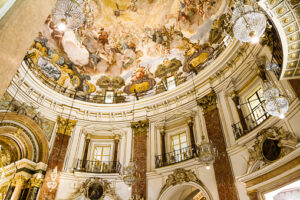
The growing popular devotion led to the construction of a temple in honor of the Virgin. The first stone of the basilica was laid in 1652, and the works were completed in 1667. It was the first Baroque building in Valencia, notable for its innovative elliptical floor plan and its offset dome—features that make it a unique architectural jewel.
🔧 Restorations and Expansions
Over the centuries, the Basilica has undergone various restorations, expansions, and artistic enhancements, which have enriched its heritage value. Among the highlights are the frescoes by Antonio Palomino in the dome (18th century), as well as the architectural connection to the Cathedral of Valencia through an arch that crosses the street.
🙏 Popular Devotion
The Virgen de los Desamparados is affectionately known as the “Geperudeta”, due to the forward inclination of her image, as if she were leaning toward the people. This closeness symbolizes her protection and has strengthened for centuries the bond between the Virgin and the Valencians. Today, her Basilica is not only a place of worship but also a symbol of identity and unity for the entire Valencian Community.